Industrial tanks in Kenya including, transport tankers, and process vessels handle aggressive fluids every day: crude hydrocarbons, refined petroleum fuels, edible oils, industrial brine, hot water, and caustic chemicals.
Without a high-performance chemical-resistant lining, these liquids react directly with interior steel surfaces, causing pinhole leaks, structural thinning, and costly product contamination.
Finding the right industrial tank lining in Kenya requires specialized resin chemistry engineered to withstand chemical attack, thermal cycling, and continuous immersion.
The Chemistry of Tank Corrosion: Why Standard Epoxies Fail
Standard bisphenol-A epoxy coatings provide solid atmospheric corrosion resistance, but they rapidly degrade when exposed to aggressive chemicals or elevated temperatures. Low-molecular-weight polar solvents, concentrated acids, and hot caustic solutions penetrate standard epoxy polymer chains, causing softening, swelling, osmotic blistering, and rapid delamination from the steel substrate.
Furthermore, storage tanks in industrial hubs like Mombasa, Athi River, and Nairobi often experience fluctuating thermal loads—such as steam-heated heavy fuel oil tanks or high-temperature processing vessels. This operational stress causes standard coatings to crack due to thermal shock, exposing bare metal to immediate chemical attack.
The Novolac Solution: Hempadur 85671
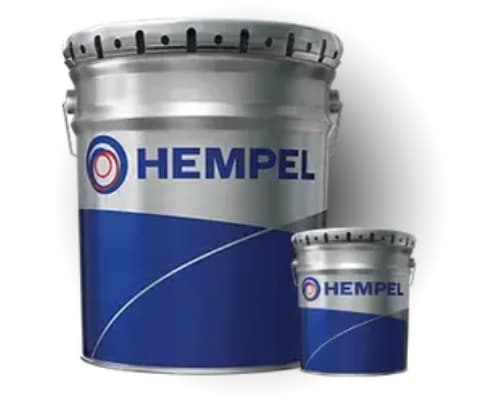
To solve this engineering challenge, Clin Corp distributes Hempadur 85671, an advanced, two-component, amine-adduct cured phenolic epoxy (novolac) coating.
Unlike conventional epoxies, phenolic novolac coatings feature a much higher cross-linking molecular density. When cured, this structure forms an impermeable molecular grid that provides superior barrier resistance against small chemical molecules and corrosive ions.
Key Performance Advantages of Hempadur 85671:
Superior Chemical Resistance: Resists attack from a wide spectrum of aggressive media, including crude oil, fuels, refined hydrocarbons, aromatic solvents, vegetable oils, fatty acids, and aggressive chemical process fluids.
Elevated Temperature Tolerance: Functions reliably under continuous high-temperature immersion, making it the premier choice for heated storage tanks, process heat exchangers, and separator vessels.
Subsea Qualification (NORSOK M-501 System 7C): Fully tested and qualified for subsea corrosion protection on hot pipelines and subsea production hardware, demonstrating its durability under extreme hydrostatic pressure.
Ultra-Dense Hardness: Amine-adduct curing yields an exceptionally hard, impact-resistant finish that withstands internal abrasion from cargo movement, agitation, and tank cleaning cycles.
Surface Preparation and Application Rigor
The service life of a high-performance chemical tank lining depends heavily on the quality of surface preparation. Novolac epoxies require an immaculate substrate to establish proper adhesion:
Abrasive Blasting: Steel must be blasted to minimum Sa 2.5 (ISO 8501-1) or SSPC-SP 10 (Near-White Metal) with a sharp, angular surface profile of 50–75 microns.
Decontamination: Soluble salts (chlorides, sulfates) must be tested and confirmed below strict international limits (typically <20 mg/m2< 20 \text{ mg/m}^2<20 mg/m2) to prevent post-application osmotic blistering.
Environmental Control: Tank interiors must be dehumidified and temperature-controlled to prevent condensation and solvent entrapment during application and curing.
Protecting Your Storage Assets with Clin Corp
Tank lining failures can cause environmental contamination, regulatory penalties, lost product inventory, and catastrophic asset damage. Clin Corp supplies genuine Hempel industrial coatings from its Nairobi distribution center, providing engineers, asset managers, and specialized coating contractors across Kenya with certified phenolic novolac systems and dependable technical support.